

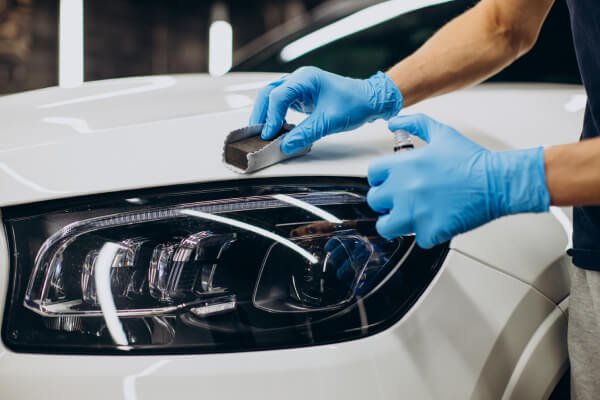
You walk out to your car and spot it straight away—a dent that definitely wasn’t there yesterday. Maybe it was a shopping trolley, a careless door swing, or a surprise hailstorm. Either way, the next question comes quickly:
Do I go for paintless dent removal, or do I need a full repair?
If you’re not in the automotive world, the difference isn’t always obvious. Both methods fix dents, but they work in very different ways—and choosing the right one can save you time, money, and a fair bit of hassle.
Let’s break it down in plain terms.
What Is Paintless Dent Removal (PDR)?
Paintless dent removal is exactly what it sounds like. Instead of sanding, filling, and repainting the damaged area, a technician carefully massages the dent out from behind the panel using specialised tools.
There’s no paint involved. No fillers. Just precision work that restores the panel to its original shape.
It’s commonly used for:
- Small to medium dents
- Hail damage
- Door dings in car parks
- Minor creases where the paint is still intact
If your car’s paint hasn’t cracked or chipped, there’s a good chance PDR is an option.
What About Traditional Repairs?
Traditional dent repair is the more familiar process most people think of.
The damaged area is sanded down, filled if needed, then repainted to match the rest of the car. It’s a more involved process and usually requires a workshop setup.
This method is used when:
- The paint is damaged or chipped
- The dent is deep or sharply creased
- There’s structural damage to the panel
- The area has been previously repaired
In short, when the damage goes beyond the surface, traditional repair becomes necessary.
Cost: Where You’ll Notice the First Difference
For most people, cost is the deciding factor.
Paintless dent removal is typically more affordable. There’s less labour, no paint materials, and the job can often be completed quickly.
Traditional repairs, on the other hand, involve multiple steps—prep, filling, painting, drying—so the cost naturally goes up.
In real terms:
If it’s a clean dent with no paint damage, PDR can save you a significant amount.
Time: Same-Day vs Several Days
This is where PDR really stands out.
Many paintless dent repairs can be done in just a few hours. In some cases, you can drop your car off in the morning and pick it up later the same day.
Traditional repairs take longer. Between paint curing and finishing work, your car might be in the shop for a couple of days—or more, depending on the damage.
If you rely on your car daily, that time difference matters.
Finish: Keeping the Original Look
One of the biggest advantages of PDR is that it preserves your car’s original paint.
That might not sound like a big deal at first, but factory paint is often more durable and consistent than a respray. Keeping it intact helps maintain the car’s value and avoids any slight colour mismatches.
With traditional repairs, a good technician can match the paint very closely—but it’s still a repaint.
Limitations: When PDR Isn’t Enough
As effective as paintless dent removal is, it’s not a solution for every situation.
If the paint is cracked, the metal is stretched too far, or the dent is in a tricky spot (like near panel edges), PDR may not deliver a clean result.
That’s where traditional repairs step in—they’re more flexible when dealing with severe damage.
So, Which One Should You Choose?
It really comes down to the condition of the damage.
- Choose paintless dent removal if the dent is minor and the paint is still intact. It’s faster, more affordable, and keeps your car original.
- Go with traditional repair if the damage is deeper, the paint is affected, or the structure of the panel has changed.
If you’re unsure, the best move is to get the dent assessed by a professional. Most experienced technicians can tell at a glance which method will give you the best result.
A Practical Way to Think About It
Think of PDR like gently pushing a dent out of a metal water bottle—no repaint needed, just careful reshaping.
Traditional repair is more like restoring a scratched and dented surface from scratch. It takes more work, but sometimes it’s the only way to make things right again.
Final Thoughts
No one enjoys dealing with car damage, but choosing the right repair method can make the process a lot smoother.
If you catch the damage early and the paint is still in good shape, paintless dent removal is often the smarter option. But when things go beyond that, traditional repairs are there to restore your car properly.
Either way, the goal is the same—getting your car back to looking the way it should, without unnecessary cost or delay.